

How AI Is Changing IT Staff Augmentation in 2026
AI is reshaping the way companies build and scale software teams. See how AI-assisted development is changing staff augmentation, engineering roles, skills, and hiring models in 2026.
August 17, 2026
Share us:
Need AI capabilities to ensure that your product stays competitive? We understand your cause. We also understand your frustration when it comes to hiring AI talent. In-house hiring is tricky: the demand for AI/ML specialists greatly surpasses the supply. Full outsourcing sounds both risky and expensive. AI staff augmentation? That might be the strategic alternative you have been looking for.
With this model, you get access to vetted AI/ML specialists that you can integrate into your existing team, minus the many months of onboarding and the threat of losing control. Sound interesting? Let’s explore this option.
If you pursue AI initiatives yet are aware of the gap between what you need and what you can realistically hire, AI staff augmentation services aren’t just a pragmatic choice. They are the superior choice. Here is why:
Make no mistake—this shortage of AI/ML talent is not temporary. Demand for AI engineering talent grows annually, while the supply shows no way of increasing. Staff augmentation, on the other hand, lets you sidestep the hiring war altogether.
When you have your product release date looming over you, hiring speed becomes a crucial factor. You cannot afford to spend up to 6 months hiring and onboarding an in-house specialist.
With staff augmentation, you can have vetted AI engineers contributing to your codebase within two to four weeks. Not getting familiar with it. Actually contributing.
AI initiatives are the epitome of uncertainty. You might need 3 engineers today, 6 next quarter, and just a couple next year. With in-house hires, you are stuck with a permanent headcount that you’ll have little idea what to do with. Staff augmentation lets you scale up and down in accordance with your project lifecycle. No severance costs. No painful layoffs.
AI is an ecosystem of specializations. Hiring one practitioner doesn’t give you access to all the skills. Need LLM, MLOps, and data engineering expertise at once? You are not likely to find this unicorn in the pool of available AI specialists. But with staff augmentation, the talent pool is infinitely broader, offering you precisely what you need and when you need it.
Just because you can hire AI developers from a staff augmentation partner doesn’t mean that you absolutely should. Such services usually excel in these scenarios:
Let’s say you want to test an AI use case. Yet, your team has no ML expertise. Hiring a team for what is essentially an experiment seems too drastic. Going with AI development services lets you bring in 2-3 specialists to build the pilot, prove value, and generate learnings.
Lucky enough to have AI practitioners on board, but your existing team is already working at full capacity? Augmented engineers will provide surge capacity for the duration of your project and then will exit cleanly.
Don’t need to integrate AI all that deep into your product? A single AI feature would be fine? This means you don’t need a full team. You just need one specialist. One that would come without the overhead of hiring. Staff augmentation it is, then.
If you still are determined to hire in-house but the search is taking longer than expected, augmentation will address your AI needs while you look for your perfect specialist.
AI augmentation is not the right choice for you if:
Sometimes, a dedicated development team is a better choice for your product. These are the most common scenarios:
Like we said, the AI label is actually multi-faceted. Here are the roles you want your augmented development team to include:
| Role | Tasks cost |
|---|---|
| DiML Engineer | Builds, trains, and deploys machine learning models. Translates research into production-ready code and ensures models perform in real-world conditions |
| Data Engineer | Builds the data pipelines that feed ML models. Handles data ingestion, transformation, and quality. Models are only as good as the data they consume |
| AI/Prompt Engineer | Specializes in working with large language models. Designs prompts, evaluates outputs, and optimizes interactions with LLMs for specific use cases |
| MLOps Engineer | Productionizes machine learning. Manages model deployment, monitoring, versioning, and infrastructure. Ensures models continue to perform after they go live |
| AI Product Manager | Bridges technical and business perspectives. Prioritizes AI features, manages stakeholder expectations, and ensures AI investments deliver business value |
| Data Scientist | Explores data and builds proof-of-concept models. Often the first AI role in a product company, focused on discovery and validation rather than production |
While clearly this hiring model is not a silver bullet, it has a number of perks that explain why it is gaining popularity.
When you go with staff augmentation, augmented AI engineers work under your management, your code review standards, and your definition of “job well done.” Technical ownership of architecture and security decisions is yours. Full outsourcing cannot deliver on that.
Hiring in-house is never cheap. You don’t just pay a salary. You also cover onboarding, bonuses, equipment, office space, and whatnot. Staff augmentation is exempt from these expenses. You just pay the vendor rate and that’s it.
AI talent acquisition is where augmentation truly shines. When you are not limited to whatever candidate you happen to come across, accessing vetted and highly skilled AI practitioners is just a matter of one phone call or Zoom meeting. With staff augmentation, you’ll get access to talent you would never find through conventional recruiting.
Augmented engineers don’t just latch onto your project blind. Proper vendors match candidates to your stack and domain, making ramp-up time insignificant. Your newly acquired IT specialists join your standups, use your tools, and start contributing within days, not weeks.
We have the why. Now it is time to see the how. Here is the augmented teams’ engagement process:
1. Establishing the need. You define the skills required within your augmented team, the duration of the engagement, and the scope of work. If you struggle to define those, a good partner will be willing to refine these requirements to ensure a good match.
2. Team selection. The partner will present candidates from their bench. You interview them, just as you would for an in-house hire. The only difference is that people that you pick are available right now, not in months.
3. Onboarding and integration in ongoing sprints. Augmented engineers join your team. Good vendors ensure their engineers can start contributing quickly. Within a couple of weeks, they start using your tools, processes, and communication channels.
4. Management and audit. You manage the team directly and schedule regular checkups to ensure alignment and performance. The vendor handles employment, payroll, and replacement if needed.
Choosing the right partner to add that little bit of AI oomph to your product is a step that discerning companies never take lightly. Here are the green flags you should be on the lookout for:
Consider companies that have relevant experience in your domain or with similar technical challenges. Ask for case studies that show they’ve solved problems like yours. The right partner will also offer you AI consulting services to audit your needs and existing infrastructure.
See if you can learn how your partner vets their engineers. Do they solely rely on resumes or test their practical skills? Find out if you can sit in on the technical assessments.
If you are building with specific LLMs or frameworks or cloud infrastructure, confirm the partner has production-proven depth in those technologies. Generalists won’t do.
If you can scale up or down with minimal friction, that is a sign of a worthwhile partner. The perfect staff augmentation partner allows you to pivot as your product roadmap evolves.
If you are a UK-based operation, chances are you’ll have trouble working with a team from across the pond. The more overlap in working hours and communication style, the faster integration will be. Besides, you’d be wise to look for partners who prioritize English fluency and proactive communication, not just technical output.
According to IDC’s analysis, the severe deficiency in AI specialists isn’t ceasing any time soon, as currently, nearly 90% of organizations are projected to struggle with the persistent skill shortage.
Since the AI talent market is not going to get any easier and you are bound to spend months looking for a specialist, staff augmentation might just be the perfect solution to your AI needs. A swift, reliable, and affordable solution. If you would like an estimate of how affordable and swift AI augmentation can be, we invite you to schedule a free consultation with our tech team.
AI is reshaping the way companies build and scale software teams. See how AI-assisted development is changing staff augmentation, engineering roles, skills, and hiring models in 2026.
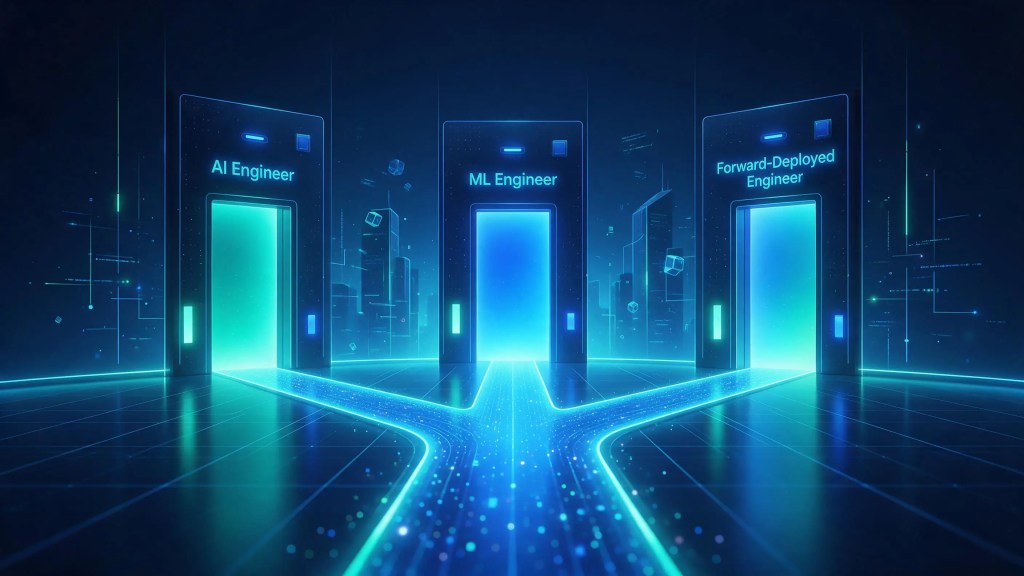
AI Engineer, ML Engineer, or Forward-Deployed Engineer — who does your team actually need? Explore the differences in their skills, responsibilities, and roles to find the right expertise for your AI project.

Do you still postpone the development of a mobile platform for your business in the sphere of healthcare? Perhaps, the benefits mentioned in this article will change your mind.
Get all the details you need before starting your risk-free trial. Call us at:
+ 44 1509 733445
