

Salesforce and SAP Integration: Pros, Cons, Cases
Do you still postpone the development of a mobile platform for your business in the sphere of healthcare? Perhaps, the benefits mentioned in this article will change your mind.
October 6, 2026
Share us:
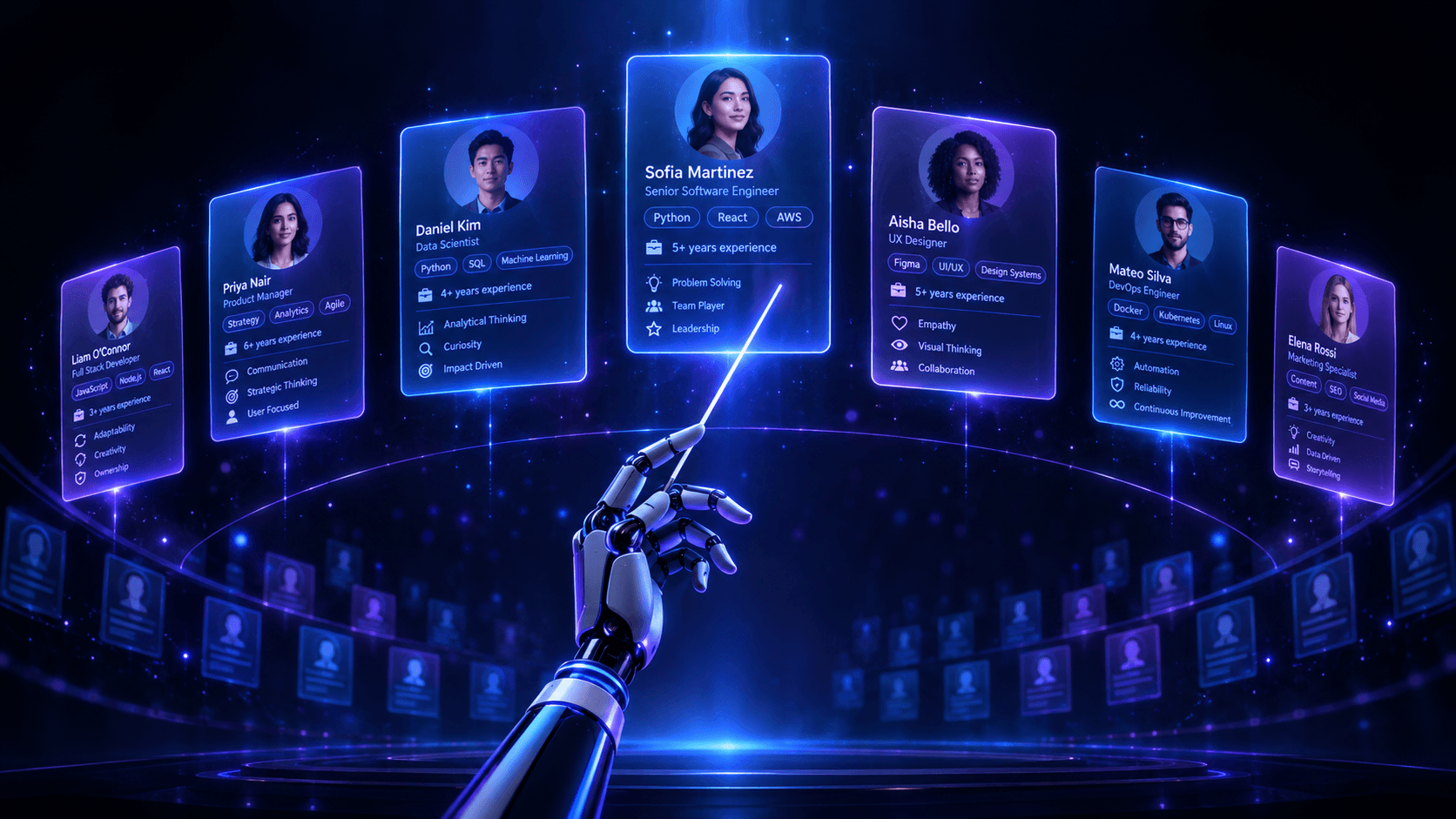
With so many facets of our lives being affected by AI, IT staff augmentation is no exception. No reason to panic (yet)—AI is not making staff augmentation obsolete. It is just reshaping what we get when we think of “effective augmentation.”
Right now, AI staff augmentation isn’t about adding more developers to a project. It is about combining specialized expertise, AI-assisted engineering practices, and measurable delivery capability—not just filling more seats.
Want to see how AI is changing the hiring game in more detail? Let’s do just that.

First off, let’s make it crystal clear what we mean when we say “AI staff augmentation.” This term can refer to two related developments in how companies extend their engineering capacity.
– First, it describes a model where a company augments its team with AI specialists: AI engineers (to build products with large language models and APIs), ML engineers (to train and optimize models), data engineers (to build the pipelines that feed AI systems), MLOps engineers (to handle deployment and monitoring), and forward-deployed engineers (to embed with product teams to solve specific integration challenges.)
– Second, it describes the reality of external software engineers heavily relying on AI-assisted development workflows as part of regular software delivery. Which is par for the course right now, as the 2025 Stack Overflow Developer Survey claims that 84% of developers are using or planning to use AI tools in their development process.
Basically, AI-focused IT staff augmentation doesn’t require assembling a dedicated “AI team” that would be separate from your existing operation. Sometimes, a single AI engineer or a software engineer versed in AI-assisted tools embedded within an existing product team is enough.
We already know that AI is rapidly reshaping the engineering staff augmentation. But in what ways? Let’s take a look.
It used to be the rule of thumb that when you engage staff augmentation services, you start the dialogue with a number. “We need five additional developers for six months,” was the usual conversation starter. This framing seemed fair as it assumed a relatively stable relationship between team size and delivery capacity. More engineers means more code and more progress, right?
Well, not quite. With AI-assisted software development entering the equation, the focus has shifted away from the headcount. Right now, one is more likely to wonder what expertise they need to deliver something of value. This makes perfect sense as code generation, testing, debugging, research, and documentation can be accelerated by AI tools.
Still, this is not to say that a specific number of AI-assisted engineers can replace a larger traditional team. While productivity gains are real, they are not even. They depend on the project, technology stack, engineer experience, AI tool maturity, quality requirements, and how well workflows are designed around the AI assistance.
This is why, before opting for staff augmentation, companies ask themselves a more logical question—what engineering capacity and expertise do we need to deliver this? That is their starting point now. Not the sheer headcount. Not the sole skills. Since every case is unique, the approach should depend on the work, not a formula.
AI is not a jack-of-all-trades. Sure, it can generate code, but it cannot make architectural decisions, evaluate security trade-offs, or determine whether an integration approach will hold up under production load.
In other words, it cannot replace judgment that experienced engineers bring to the table. They are the ones deciding how systems should be structured for scalability and maintainability. They are the ones evaluating whether AI-generated code meets quality standards and fits the existing codebase. They are the ones anticipating failure modes, security vulnerabilities, and operational complexity.
Besides, the mere distrust of AI-generated output (with 66% of devs spending more time fixing “almost right” AI-generated code, per the 2025 Stack Overflow survey) is another reason senior engineer expertise is not going obsolete any time soon. Make no mistake—AI tools are far from useless. It’s just that only experienced engineers can identify what is wrong and why.
AI-assisted development is no longer a novelty but a standard part of professional software engineering practice. AI is employed everywhere, from coding assistance, debugging, and test generation to documentation, research, code explanation, refactoring, and prototyping.
This is a less-than-subtle way that AI creates implications for software development staff augmentation. Whenever a company brings in an external engineer, they are basically expected to work within the team’s existing workflows that inevitably sport an increasing amount of AI tools. Don’t know how to work with those effectively? You are at a disadvantage.
An important sidenote. When a software engineer uses AI development tools, this alone does not make them an AI engineer. Building AI-powered functionality requires additional knowledge. It might be understanding model capabilities and limitations, designing prompts and retrieval systems, managing data pipelines, or implementing evaluation frameworks—it all depends on a project.
The roster of roles sought by companies is expanding. While backend, frontend, mobile, QA, and DevOps engineers are not going anywhere any time soon, they are being accompanied by AI engineers, ML engineers, MLOps engineers, data engineers, and forward-deployed engineers. Their job is to do what traditional software developers aren’t quite seasoned in.
– An AI engineer builds applications on top of existing models (integrating APIs, designing RAG pipelines, and implementing guardrails)
– An ML engineer trains and optimizes models, working with training data, model architecture, and performance metrics
– A data engineer builds pipelines that make AI systems possible
– An MLOps engineer handles deployment, monitoring, and lifecycle management
– A forward-deployed engineer embeds with product teams to solve integration challenges in context of a given company
Despite how much AI enthusiasts wish to believe it, AI does not change everything about how IT products are built. While sure, AI does change the workflow and can even increase productivity, it is not omnipotent. Here are the aspects that still warrant your attention despite the expansion of AI.
– Software architecture. Someone still needs to design systems that can scale, integrate with existing infrastructure, and accommodate future requirements. AI can suggest a pattern. But making binding architectural decisions with long-term consequences is still a human responsibility.
– Domain knowledge. AI tools cannot replace knowledge of compliance requirements in healthcare or understanding of transaction integrity and audit trails of financial systems.
– Security. AI-generated code can introduce vulnerabilities. It is not a scary story to tell in the dark but a very real possibility. After all, the 2025 DORA’s report does state that higher AI adoption correlates with increased delivery instability.
– Testing and QA. While AI *can* generate tests, it cannot determine whether the tests cover the right scenarios or whether passing tests actually mean the software works properly. Human judgment is in order.
– Code review. Can AI evaluate code in terms of it solving the right problem? Or in terms of implementation being maintainable by the people who will inherit it? No. But it can review the code for bugs just fine.
– Communication. That one human skill that AI fails at. External engineers need to collaborate with internal teams and clearly understand product requirements. There is no room for a sudden hallucination here.
– Accountability for production software. When something breaks out of the blue, it is human effort and knowledge of the system that can diagnose the issue and fix it in no time.
Now let’s take a look at how external devs from AI engineering services differ from those of traditional services.
| Dimension | Traditional Staff Augmentation | AI-Era Staff Augmentation |
|---|---|---|
| Primary Focus | Additional capacity | Capacity combined with specialized expertise |
| Role Definition | Roles often defined upfront | Team composition may evolve with the problem |
| Workflows | Conventional engineering workflows | Increasing use of AI-assisted workflows |
| Role Types | Mostly traditional software roles | Traditional plus AI/data roles |
| Planning Input | Headcount is the primary planning input | Greater focus on engineering capacity and outcomes |
Make no mistake—this is not a strict distinction. Traditional staff augmentation might as well already be highly expertise-driven and outcome-oriented. Many engagements of this sort require specialized skills and deliver measurable results.
This table is only intended to highlight the broader changes that AI is accelerating and not to pit what mistakenly appears to be two separate service models against each other.
Thinking of augmenting your own AI development team? See if your case fits these scenarios.
– You want to add AI features to an existing product. Your internal team has the knowledge of the product architecture and user needs. What they don’t have is hands-on experience. An AI engineer or two embedded with the existing team can deliver the feature without requiring the company to rebuild their whole product from scratch.
– You need specific AI expertise that your team lacks. Your existing engineering team can confidently maintain the product, ship features, and handle operations. But implementing a specific AI capability? Now that’s a challenge. Bringing in an external engineer will bridge the gap between “we want” and “we can.”
– You only need AI expertise temporarily. While you do need specialized expertise for implementation or validation, you cannot justify a full-time hire. An external engineer will provide the flexibility that a permanent hire cannot.
– You want to validate an AI feature before expanding the team. Not sure if you are ready to commit to building a larger internal AI capability? Get yourself an external engineer to prototype and productionize an AI feature. If the feature works, you’ll have a proven implementation and a clearer understanding of what skills to hire.
– Your existing team needs additional development capacity. AI staff augmentation doesn’t have to be *just* AI-related. Sometimes, a product team might simply need additional experienced engineers to augment an existing team. With AI tools in their arsenal, these engineers may deliver more than a traditional augmentation engagement.
If AI staff augmentation looks like something right up your alley, you might be wondering how to find the right partner for this task. A short answer—look beyond rates and resumes. A longer answer—here is what you need to evaluate before you shake hands.
– Strong conventional software engineering expertise. Because it’s not like AI features float in vacuum. They integrate with existing systems, follow existing patterns, and must be maintained by existing teams. This means that a worthwhile partner should understand production software engineering.
– Practical AI implementation experience. And we are not just talking about AI prototypes. Many teams have built demos. And how many teams have deployed AI features that handle real users, real data, and real failure modes? Few and far between.
– Ability to integrate AI into existing products. Ironically, AI itself is rarely the hardest part of AI implementation. Integration is the biggest pain in the neck, with the need to connect models to existing data sources, handle latency and error cases, and ensure security and compliance. A partner who understands integration, not just the model, is definitely worthwhile.
– Understanding of data and security requirements. You need to be on the lookout for a partner who can discuss data governance, access controls, and compliance requirements without prompting.
– Experience working with existing engineering teams. You know that you’ve struck gold with your partner when their engineers feel like an extension of your internal team. The secret ingredient for that? Communication skills, adaptability, and respect for existing conventions.
– Flexible access to different technical roles. At the start, the right team composition tends to be less than obvious. A proper partner will have access to all sorts of AI roles and will adjust to your needs as the project evolves.
– Ability to recommend an appropriate team composition. It’s not just the access to an impressive talent pool that matters. The willingness to help you figure out what you really need does too. This sort of partner asks questions, understands the problem, and proposes a team structure that fits.
– Clear ownership and accountability. Augmentation should not imply inevitable abdication. In fact, a worthwhile partner should take responsibility for delivery.
– Production experience rather than only AI prototypes. Not to discount the importance of prototypes, though. They are great for learning. But it is the production systems that deliver value.
Here is the underlying principle you need to keep in mind: AI expertise should complement software engineering expertise, not replace it. If you are a company looking to integrate AI into an established SaaS product, you need engineers who understand both AI capabilities and conventional production software. It is the combination that delivers results.
What we are seeing now—and what we are likely to see further on—is that AI is hardly a threat to a traditional AI staff augmentation. But it does seem to influence what companies are willing to pay for in this regard.
Mindlessly supplying engineers just to fill the seats might cease to be a to-go option when an individual developer productivity can be significantly improved with AI tools. In this case, the question is likely to shift from “How many people can you provide?” to “What can your team realistically deliver?”
With all that in mind, we expect the value of staff augmentation to increasingly come from a combination of factors: specialized expertise, AI-enabled productivity, domain understanding, integration capability, and delivery responsibility. If you asked us what the most effective engagements were, we’d say those where the partner brings not just people but the ability to solve problems that the client cannot solve on their own.
While it is not likely that headcount becomes irrelevant, it appears to be losing its status as the primary unit of value. Companies are likely to stop thinking solely in terms of headcount and shift their focus to buying engineering capacity *coupled* with expertise. The shift might not happen overnight, as many engagements will continue to be defined by roles and durations.
AI staff augmentation is probably not going to make traditional staff augmentation irrelevant any time soon. It is merely showing the idea many IT leaders’ minds are gravitating toward. And this idea is a new understanding of what effective staff augmentation really constitutes.
Companies will still need engineers, no doubt about it. But it’s not the additional headcount they will be after, but the right combination of software engineering, AI expertise, and delivery capacity.
And that is something that UNL Solutions can provide.
If you need an AI specialist, an experienced software engineer, or a broader development team, we at UNL Solutions will be happy to help you identify the skills required and bring you the right talent to do the job.
AI staff augmentation refers to extending engineering teams with external specialists with AI-related expertise. These include but are not limited to AI engineers, ML engineers, data engineers, or MLOps engineers. It also refers to a staff augmentation model that sees software engineers using AI tools as part of regular software delivery.
AI is gradually shifting the focus from headcount to engineering capacity and outcomes. Companies increasingly seek specialized AI expertise alongside traditional software engineering skills as AI-assisted development changes productivity expectations. Engagements are becoming more outcome-oriented, particularly for AI-related projects.
Not necessarily. While AI *can* improve productivity on certain tasks like code generation, documentation, and debugging, team requirements for augmentation depend on many factors: product complexity, architecture, security requirements, quality standards, domain expertise, and project scope.
In no particular order, these are AI engineers (building applications on top of models), ML engineers (training and optimizing models), MLOps engineers (handling deployment and monitoring), data engineers (building pipelines), and forward-deployed engineers (working from within internal product teams). Also, don’t forget conventional software engineers experienced in integrating AI into existing products.
Do you still postpone the development of a mobile platform for your business in the sphere of healthcare? Perhaps, the benefits mentioned in this article will change your mind.
Discover why your business needs a Salesforce integration and which type to choose. Find out how to hire the right consultants for the job.

Learn what a Forward-Deployed Engineer (FDE) does, how the role differs from traditional software and AI engineering, and why FDEs are becoming increasingly relevant for companies building and deploying AI solutions.
Get all the details you need before starting your risk-free trial. Call us at:
+ 44 1509 733445
